Designing a system that turns health data into daily decisions
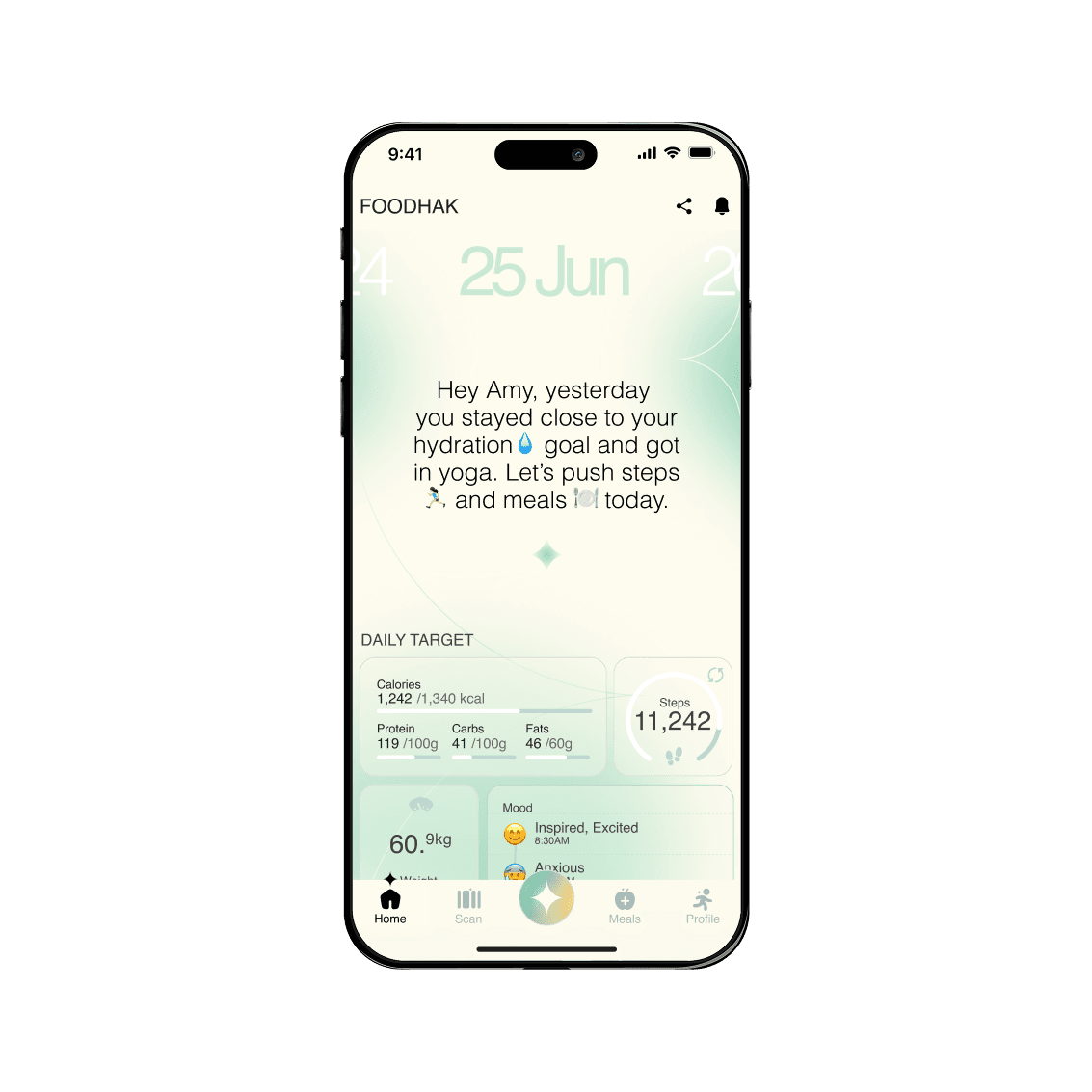
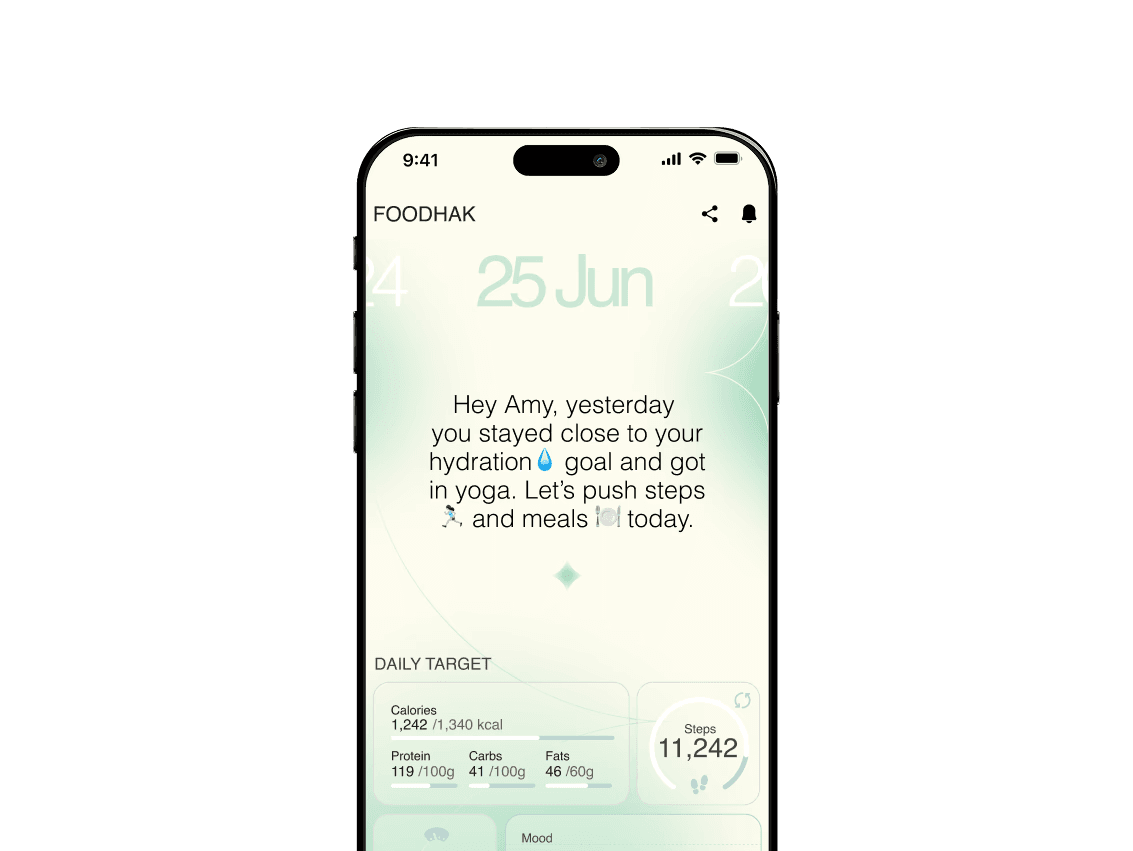
Architecting the future of digital wellness by building 0-to-1, AI-driven health platforms that bridge complex data with human-centric design.

Architecting the future of digital wellness by building 0-to-1, AI-driven health platforms that bridge complex data with human-centric design

Personalization
Trust
Behavior change
The Problem

Too much data, not enough guidance

Generic recommendations → low relevance

Users drop off due to fatigue + confusion

Retrospect, Shirs

AI is only valuable when grounded in real user context. Trust is also a design problem, not just a technical one. Constrains (clinical, privacy) can strengthen product decisions 

From tracking → guiding

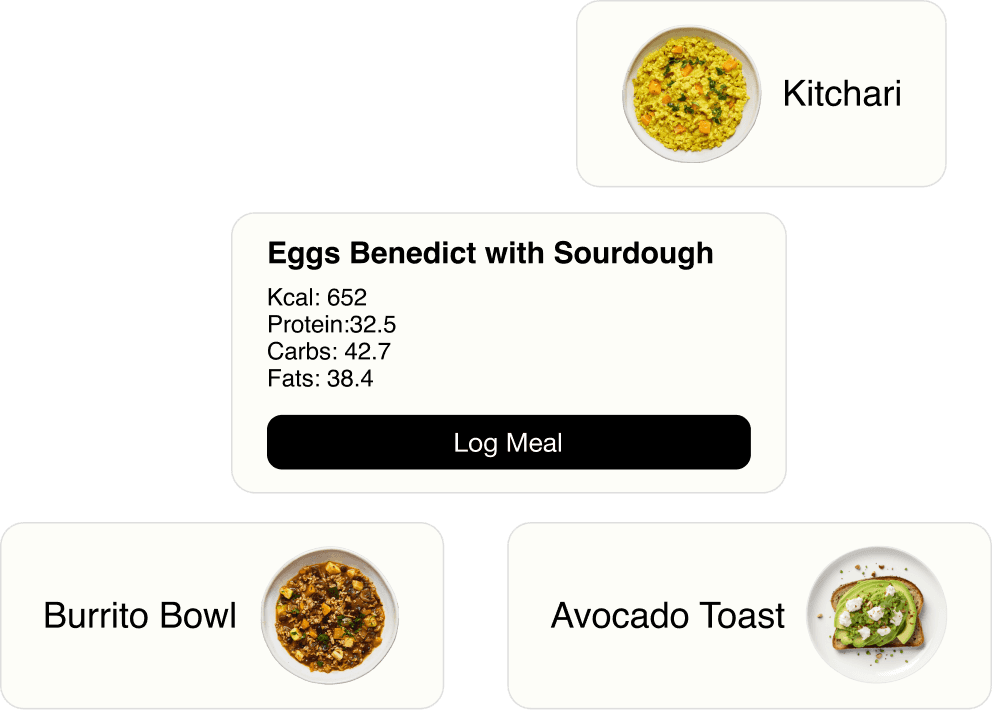
  • Logging calories

  • Calculating calories and stats

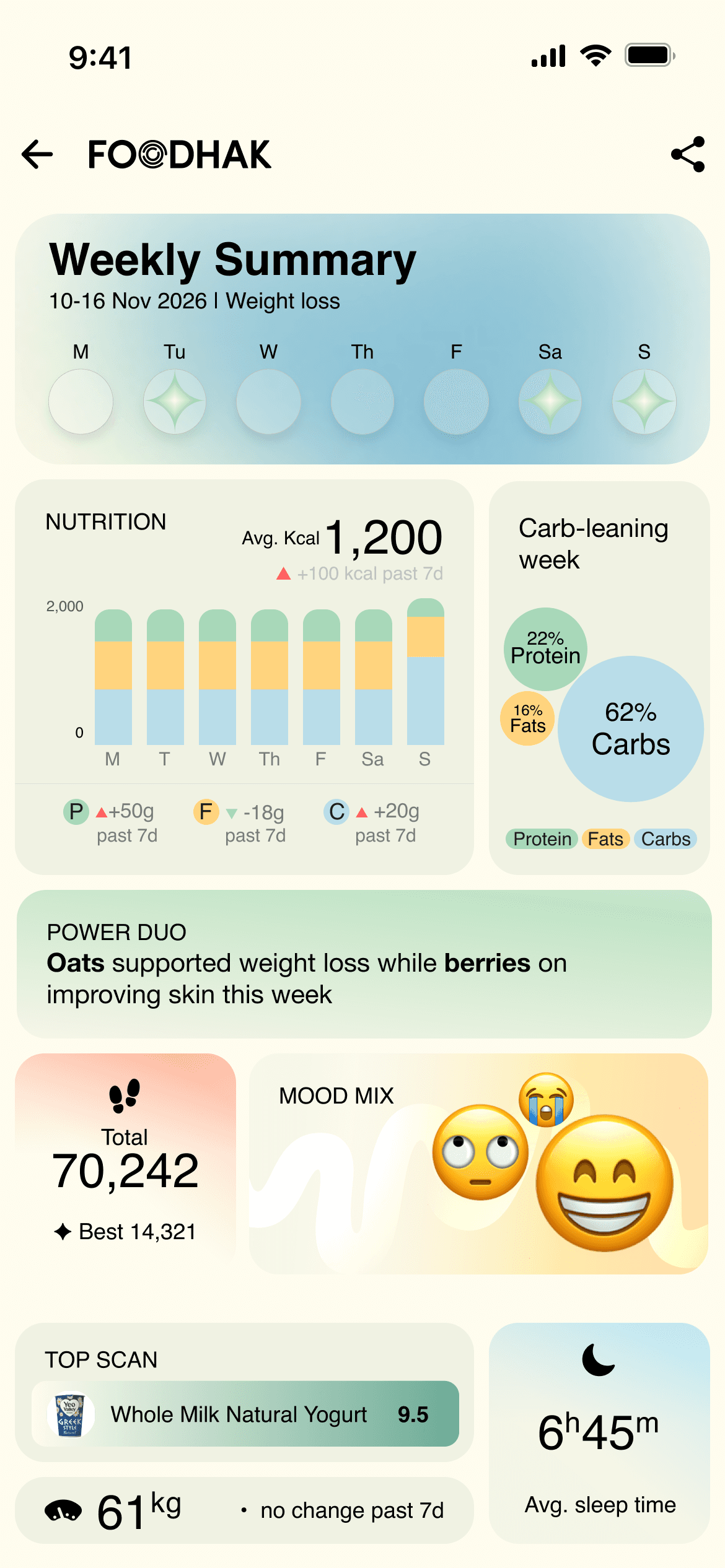
  • Contextual insights

  • Actionable recommendations

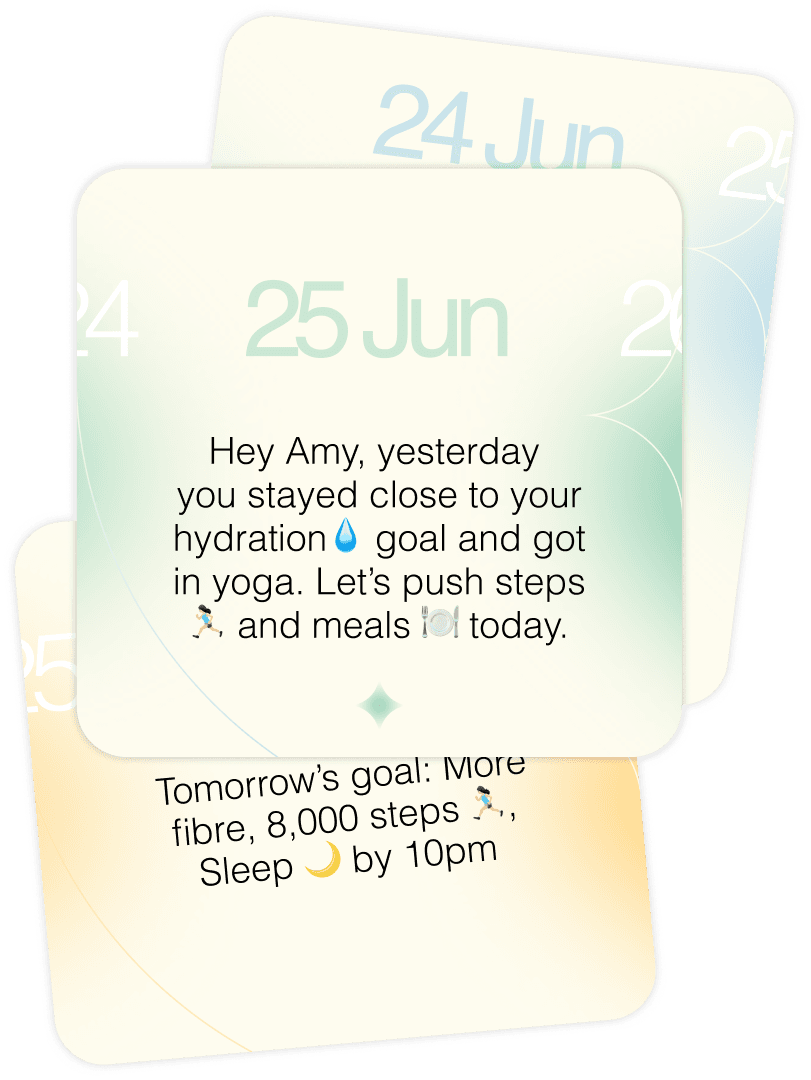
  • Behavioral nudges

Effortless
Health Concious
seamless

Core Concept

Foodhak Assistant Insights

“You’ve had high sodium for 3 days — here’s a small change today.”

“You’ve had high sodium for 3 days,

here’s a small change today.”

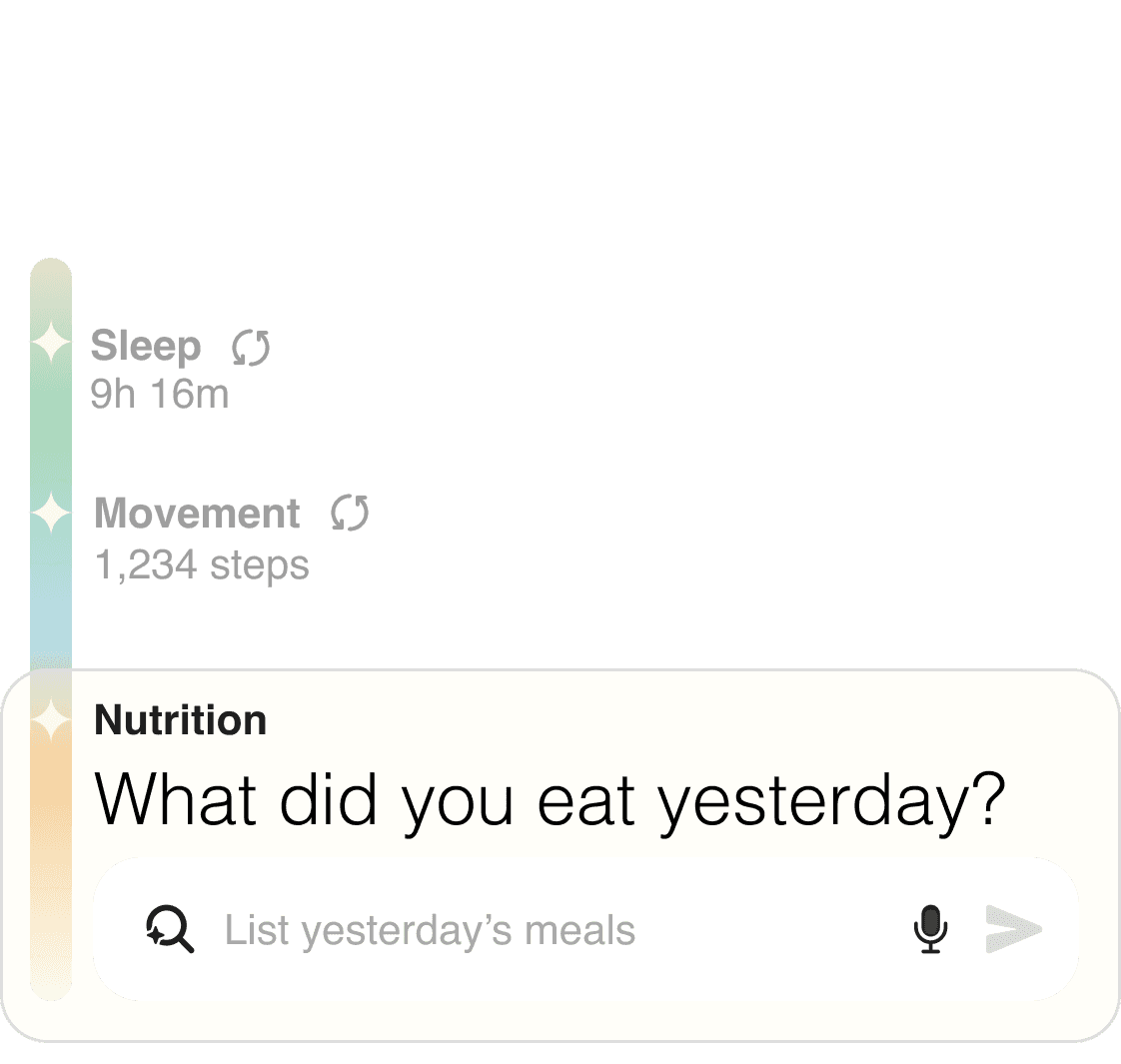
Interprets user behavior (food, sleep, activity)

Surfaces insights at the right moment

Explains why recommendations are made

System Thinking

Closed-loop design
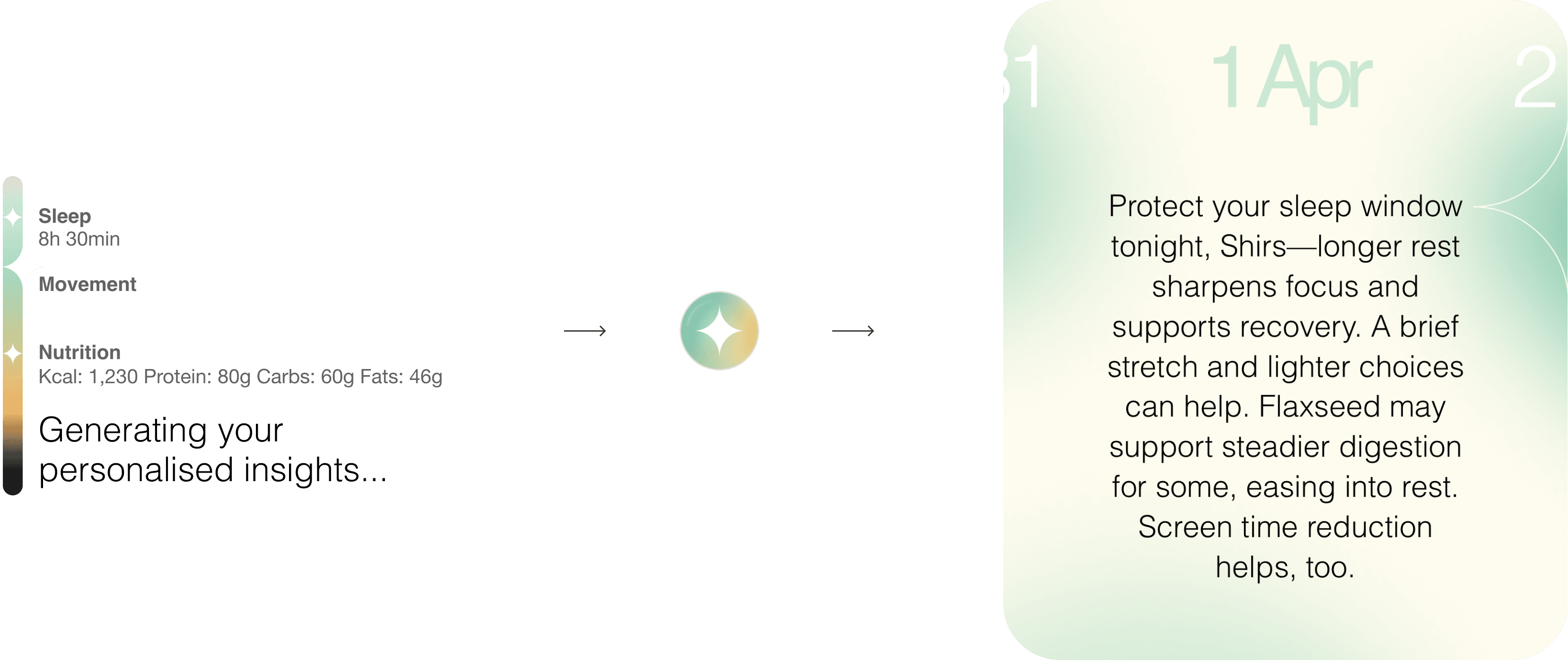
User data input —> Processing (AI engine, RAG controlled env.) —> Contextual recommendations

Key Product Decisions

Adaptive Experience

Adaptive Experience

Not static plans, reduce cognitive load

Proactive insights

Proactive insights

AI surfaces weekly progress without prompting
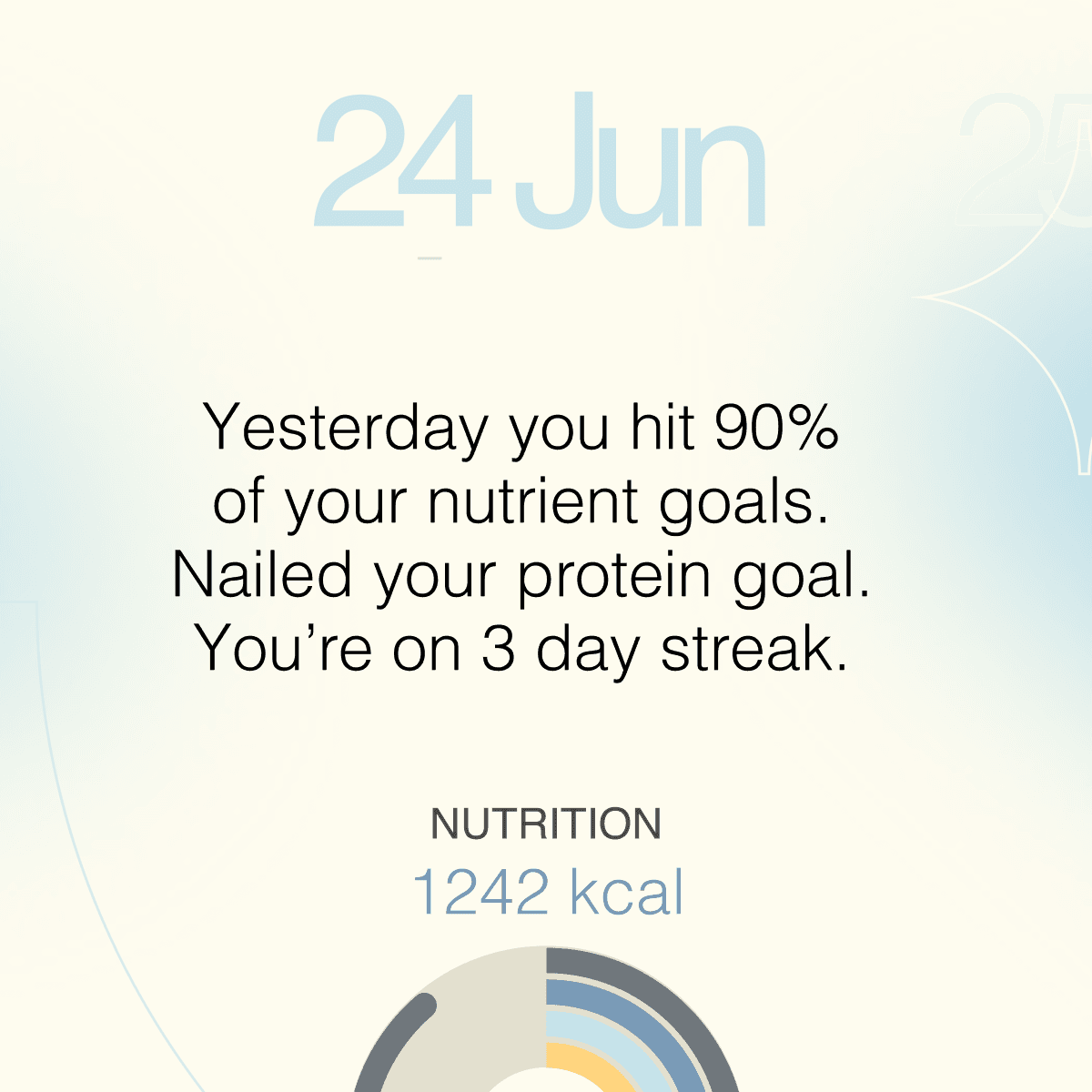
Value adherence pattern

Value adherence pattern

Adapt to real behavior, not ideal scenarios
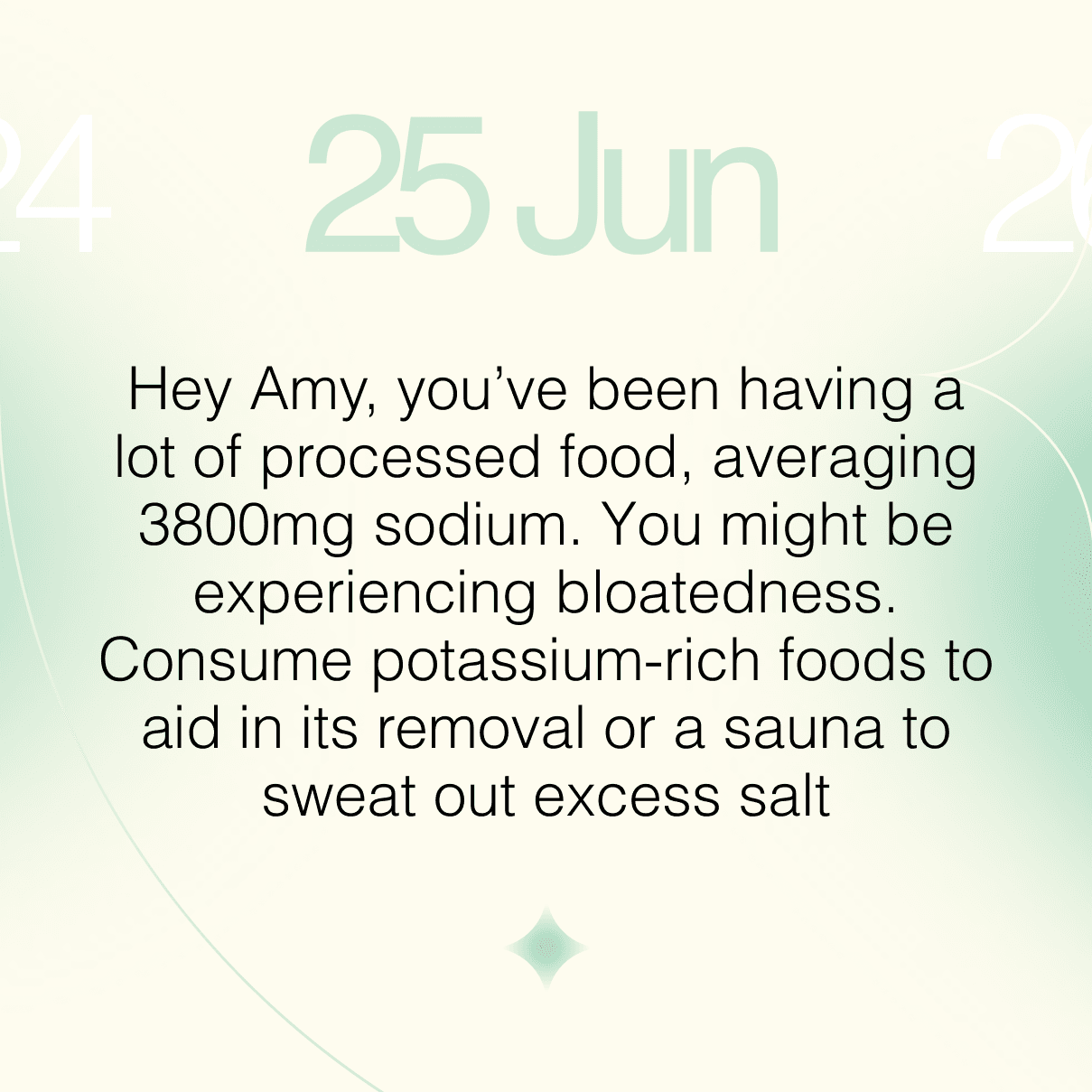
Explainability over “magic”

Explainability over “magic”

Recovery needed

  • Improved adherence to routines

  • More stable weight management

  • Reduced burnout from tracking

  • Better recovery and sleep awareness

  • Scalable personalization without coaching

  • Strong privacy moat (on-device data)

  • Clinically defensible system

  • Foundation for long-term AI health optimization

  • Clear differentiation from calorie trackers

  • Premium personalization tier

  • Pathway to clinical + enterprise partnerships

  • Potential for publishable health outcomes
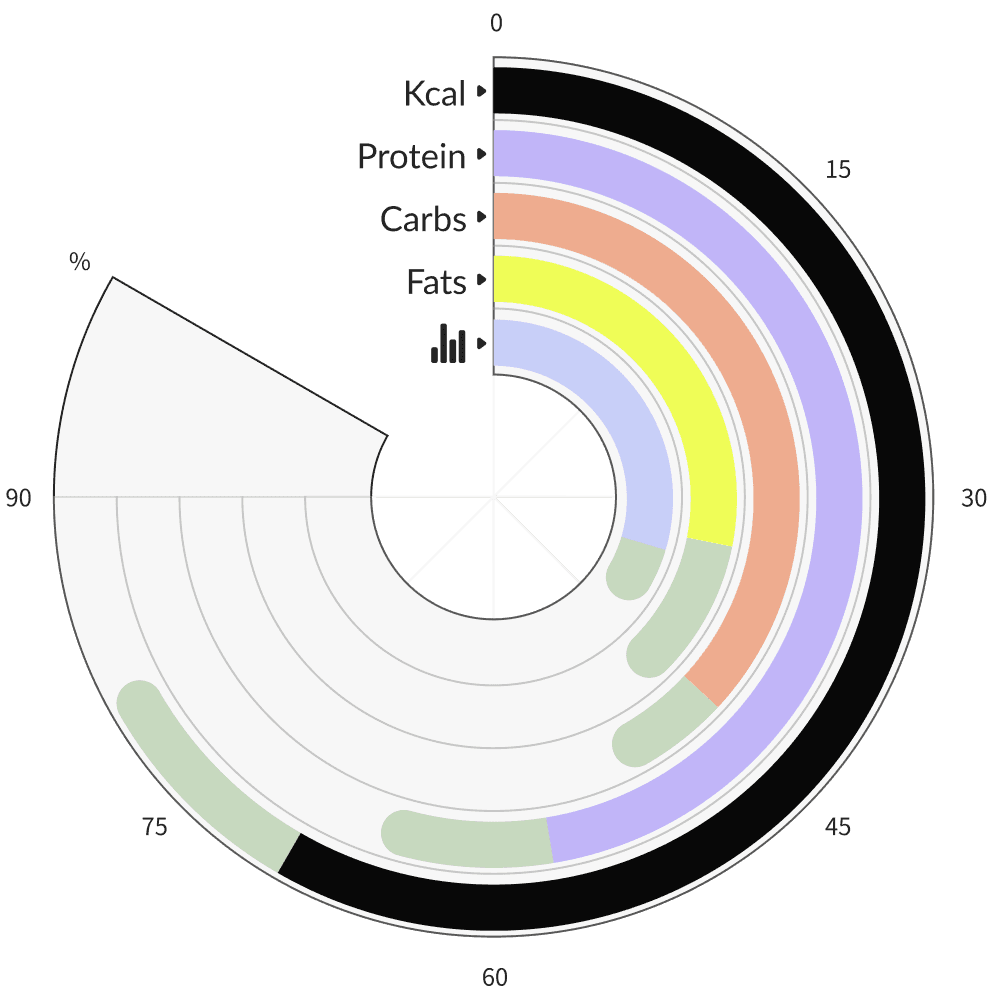
What I'd improve next

in health — precision is valuable

What I'd improve next in health, precision is valuable

Deeper Personalization Using Longitudinal Data
Not reacting to today → learning patterns over weeks/months

Examples:

  • Pattern Detection

    “You consistently feel fatigued on low-carb days after 3PM”

  • Adaptive Recommendations

    • Week 1: “Reduce sugar intake”

    • Week 4: “Switch lunch composition — your energy drops after this specific meal pattern”

  • Personal Baselines (not generic)

    • Your “normal” sleep = 6.5h

    • Your “optimal” = 7.2h (based on recovery data)

Comprehensive Visualization
Charts ≠ understanding
Allow Predictive Insights
“What Happens If…”

Examples:

  • Order Detection

    "You ordered food from Doordash.."

  • Adaptive

    • Quick log?

  • Prediction Baseline

    • User eats lunch at 12PM - 1PM everyday.

    • You consistently snack at …

    • You might feel, want to …

Deeper Personalization Using Longitudinal Data
Not reacting to today → learning patterns over weeks/months

Examples:

  • Pattern Detection

    “You consistently feel fatigued on low-carb days after 3PM”

  • Adaptive Recommendations

    • Week 1: “Reduce sugar intake”

    • Week 4: “Switch lunch composition — your energy drops after this specific meal pattern”

  • Personal Baselines (not generic)

    • Your “normal” sleep = 6.5h

    • Your “optimal” = 7.2h (based on recovery data)

Comprehensive Visualization
Charts ≠ understanding
Allow Predictive Insights
“What Happens If…”

Examples:

  • Order Detection

    "You ordered food from Doordash.."

  • Adaptive

    • Quick log?

  • Prediction Baseline

    • User eats lunch at 12PM - 1PM everyday.

    • You consistently snack at …

    • You might feel, want to …

Retrospect, Shirs

AI is only valuable when grounded in real user context. Trust is also a design problem, not just a technical one. Constrains (clinical, privacy) can strengthen product decisions 

AI is only valuable when grounded in real user context. Trust is also a design problem, not just a technical one. Constrains (clinical, privacy) can strengthen product decisions